Father Martin
Narcissus and GoldmundFather Martin is the former head of the school at Mariabronn who succeeded Abbot Daniel as abbot. Though his tenure is related only in retrospect, he remains present in the monastery’s succession and in Goldmund’s design for a carved lectern, which gives him a lasting place among the figures memorialized in its sacred imagery.
Position at Mariabronn
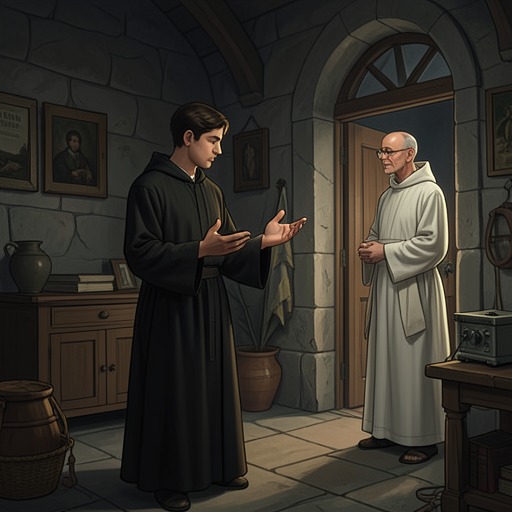
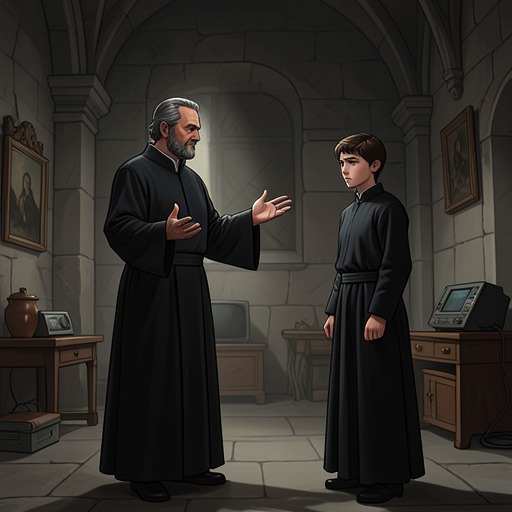
Father Martin had been head of the monastery’s school before succeeding Abbot Daniel. His death is reported by Narcissus, who tells Goldmund that Daniel died eight years earlier and that Father Martin, in turn, became Daniel’s successor. Father Martin held the office until his own death the year before Narcissus’s account, at nearly seventy years of age.
The account places Father Martin within Mariabronn’s continuing institutional life rather than presenting him through scenes of personal action. The monastery’s teaching, religious practice, and government pass from one generation to another; the succession from Daniel to Martin and then to Narcissus gives that broader continuity a concrete human form.
Memory and Commemoration
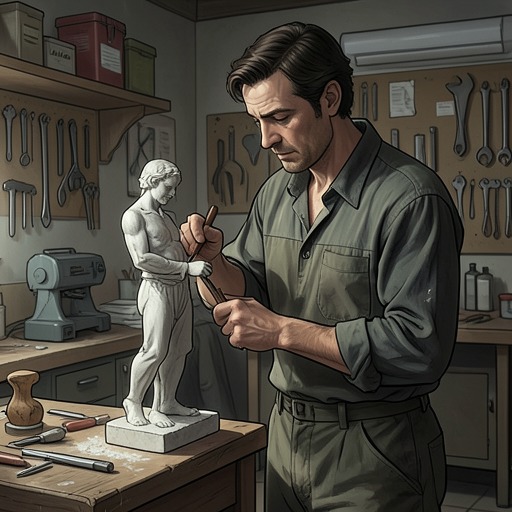
Father Martin also enters Goldmund’s work as a remembered person. In planning the refectory lectern, Goldmund divides its imagery between the created world below and the word of God above. The lower structure is to rise from an oak trunk and carry images of nature and the lives of patriarchs and prophets; the upper parapet is to bear the four apostles.
Goldmund plans to give one evangelist the features of Father Martin, alongside figures bearing the likenesses of Abbot Daniel and Master Niklaus. The design makes the lectern more than a religious furnishing: it joins sacred history to the particular people who shaped Goldmund’s life and the monastery’s past. Father Martin’s likeness is thus intended to endure within a work made for the community he once governed.
Place in the Monastery’s Succession
After returning to Mariabronn, Goldmund sees the monastery as a unified inheritance formed by generations of building, art, thought, and teaching. He recognizes differences between the kindly, simple Daniel and the more scholarly Abbot John, yet understands both as serving the same order. Father Martin’s succession between Daniel and Narcissus belongs to this pattern: authority changes hands, but the institution continues.
His appearance in Goldmund’s proposed apostolic imagery brings that institutional continuity into the artist’s personal memorial practice. Alongside the saints, the deceased abbots and the master who trained Goldmund are to be given recognizable human faces. Father Martin’s role in the narrative is consequently defined by two forms of succession—his place in the governance of Mariabronn and his planned preservation in the sculpture Goldmund creates there.